
Understanding Multi-Agent Systems: Transforming Businesses with Agentic AI
Estimated reading time: 8 minutes
Key Takeaways
- Multi-agent systems (MAS) involve networks of autonomous AI agents working collaboratively.
- MAS dramatically improve efficiency and decision-making capabilities in various sectors.
- Challenges in scaling MAS include technical complexity and resource allocation issues.
- Understanding the difference between agentic AI and traditional automation is crucial for businesses.
- Strategies like pilot projects and team training can ease the adoption of MAS.
Table of contents
- Understanding Multi-Agent Systems
- Difference Between Agentic AI and Traditional Automation
- Transforming Businesses with Multi-Agent Systems
- Scaling Challenges in Multi-Agent Systems
- AI Adoption Strategies for Multi-Agent Systems
- Human-in-the-Loop vs. Autonomous Processes
- Conclusion
- Call to Action
- Frequently Asked Questions
Understanding Multi-Agent Systems
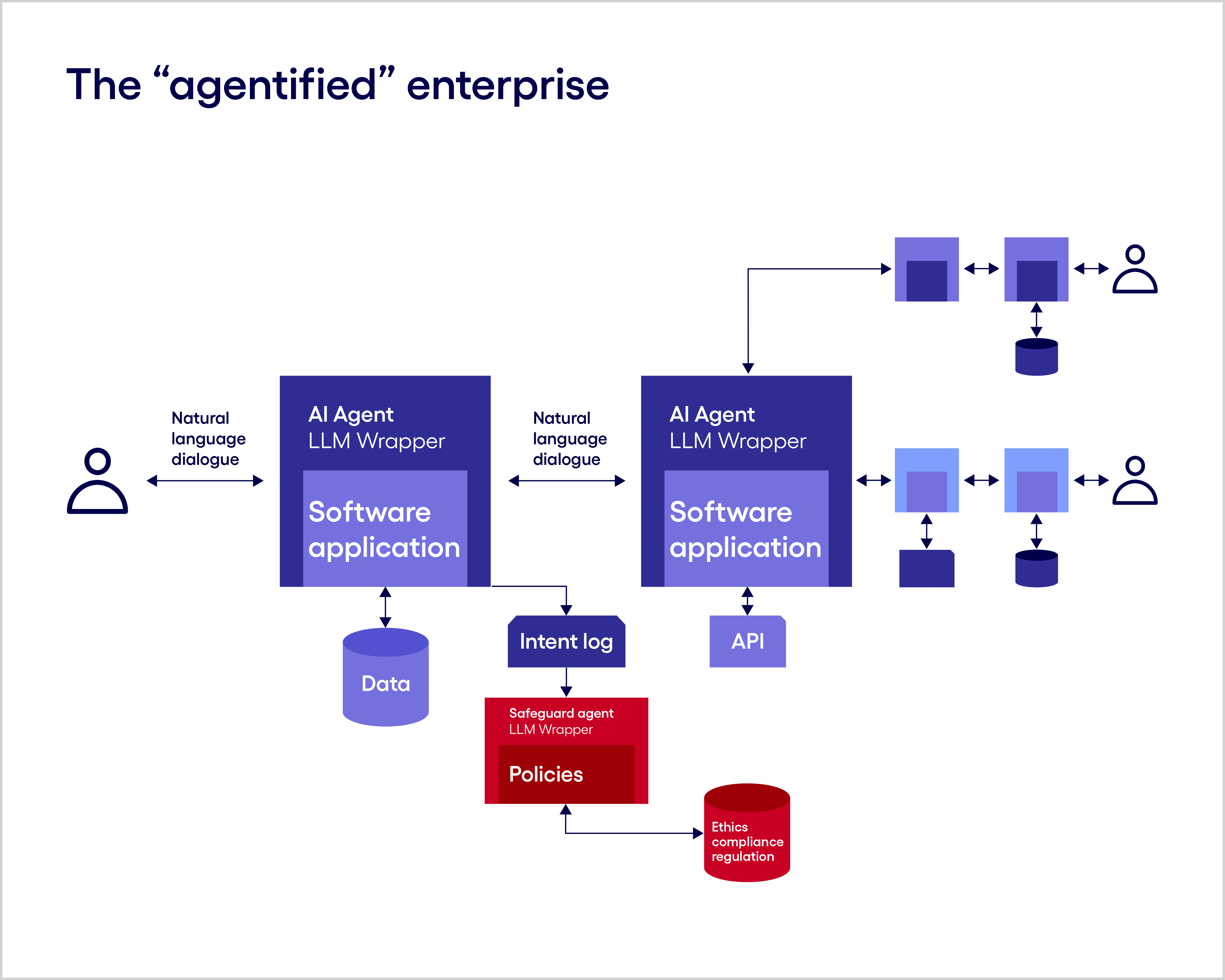
Multi-agent systems (MAS) constitute a computerized framework in which multiple intelligent agents interact and collaborate to achieve individual or shared goals. [Source]. These agents can be software programs, robots, or other intelligent entities capable of independent operation and real-time decision-making.
- Each agent is autonomous, possessing individual goals and learning capabilities. [Source]
- Agents may exhibit complex social behaviors, such as negotiation, cooperation, and competition, to fulfill their missions.
- The architecture of MAS is often characterized by emergent behavior, where the group performance exceeds the sum of individual actions. [Source]
Types of Multi-Agent Systems
- Cooperative Agents: These agents share information and work together toward common objectives, enhancing overall effectiveness.
- Competitive Agents: These agents have conflicting goals and may compete for resources or results, driving innovation through rivalry.
- Hybrid Agents: A blend of cooperation and competition, where the interaction style adjusts based on context and varying objectives. [Source]
Difference Between Agentic AI and Traditional Automation
Understanding Traditional Automation
Traditional automation typically involves single-agent systems that carry out predefined, repetitive tasks based on established rules. These systems can effectively automate straightforward processes but lack the adaptability and advanced decision-making capabilities needed in dynamic environments.
Exploring Agentic AI
Agentic AI, on the other hand, employs autonomous agents equipped with sophisticated decision-making capabilities. These agents can dynamically respond to changes, negotiate with peers, and facilitate labor division among themselves. The key distinctions between agentic AI and traditional automation include:
- Proactivity vs. Reactivity: Agents in MAS are proactive and can anticipate needs rather than just responding to tasks as they arise.
- Adaptive Responses: Interactions between peers allow for flexibility and adaptability in addressing the evolving demands of business operations.
Real-World Example: Inventory Management
In traditional systems, inventory management often follows static rules for restocking items, relying heavily on predefined thresholds. In contrast, a multi-agent system can collaboratively forecast demand through real-time data analysis, negotiate with suppliers regarding stock levels, and respond to disruptions swiftly. This dynamic capability illustrates a clear advantage over rigid traditional methods. [Source], [Source]
Transforming Businesses with Multi-Agent Systems
Multi-agent systems are revolutionizing how businesses operate in various domains by:
1. Improving Efficiency
By harnessing the power of parallel task execution, MAS can distribute problem-solving efforts among multiple agents, significantly enhancing operational efficiency.
2. Enhancing Decision-Making
Collective intelligence, derived from the interaction of diverse agents, elevates the quality of decision-making. This collective approach allows organizations to tap into a wealth of knowledge and analytical capability.
3. Increasing Responsiveness
Multi-agent systems enable rapid adjustments in response to new information and emerging trends, allowing businesses to maintain a competitive edge in a fast-changing environment. [Source]
Application Example in Finance
In the finance sector, MAS is being deployed for tasks such as high-frequency trading and fraud detection. These systems can analyze enormous datasets, making decisions at speeds unattainable by human analysts, thereby identifying potential fraudulent activities almost in real-time and executing trades more profitably.
Scaling Challenges in Multi-Agent Systems
Despite their advantages, businesses face several challenges when attempting to scale multi-agent systems effectively:
1. Technical Complexity
Managing the intricate interactions among agents and ensuring reliable communication can be daunting. Organizations need robust infrastructures and protocols to facilitate interaction.
2. Resource Allocation Issues
Scaling MAS often introduces challenges related to computational overhead and network bandwidth, necessitating careful resource management.
3. Management Concerns
Monitoring the performance of a large number of agents and troubleshooting emergent behaviors poses additional challenges for businesses.
Despite these hurdles, MAS offer scalability advantages, as individual agents can be updated or replaced without the need for an entire system overhaul. [Source], [Source]
AI Adoption Strategies for Multi-Agent Systems
For businesses considering adopting multi-agent systems, the following actionable strategies can be beneficial:
1. Pilot Projects
Commence with pilot projects tailored to validate the benefits of MAS in specific business areas. Testing in controlled environments can provide valuable insights and reduce risks.
2. Team Training
Invest in training programs that equip existing employees with an understanding of agent-based paradigms, ensuring they can effectively navigate the complexities of MAS.
3. Gradual Integration
Introduce MAS gradually, affording companies ample time to adapt processes and assess system performance.
4. Continuous Refinement
Stay engaged in continuously updating and refining agent behaviors to ensure that they align closely with evolving business needs. [Source]
Human-in-the-Loop vs. Autonomous Processes
Human-in-the-Loop (HITL) Systems
HITL systems combine human judgment with agentic decision-making. In many scenarios, such as high-stakes operations, human oversight becomes crucial to ensure that decisions made by agents are sound and align with human ethics and objectives.
Fully Autonomous Systems
On the other hand, fully autonomous systems operate independently, maximizing speed and efficiency. However, this can introduce risks, particularly in unpredictable scenarios where human insight may be invaluable.
Comparative Table
| Dimension | Human-in-the-Loop Systems | Fully Autonomous Systems |
|---|---|---|
| Oversight | High | Low |
| Adaptability | High (involves human expertise) | High (agents learn independently) |
| Speed | Moderate | High |
| Risk Management | Strong | Requires thorough design |
Case Studies: Manufacturing and Finance
In manufacturing, HITL allows human operators to monitor robot execution for quality control, balancing efficiency with human oversight. In finance, MAS can help achieve rapid data analysis but still benefit from human intervention to interpret nuances in risk.
Conclusion
Multi-agent systems signify a transformative shift in intelligent automation, empowering businesses to tackle complex challenges like never before. By embracing agentic AI and recognizing its distinctions compared to traditional automation, organizations can unlock unprecedented levels of adaptability, innovation, and operational performance. [Source], [Source]
Call to Action
We encourage readers to explore further resources on multi-agent systems and consider how the adoption of agentic AI could potentially reshape their businesses. Sharing your experiences or thoughts on implementing MAS can foster collective learning and advancement in this exciting field.
Frequently Asked Questions
What industries can benefit from multi-agent systems?
Industries such as finance, manufacturing, logistics, and healthcare can leverage MAS to enhance efficiency and decision-making.
How do I get started with multi-agent systems?
Begin with pilot projects and invest in training for your team to understand agent-based paradigms.
Are there risks associated with fully autonomous systems?
Yes, risks include potential misalignment with human values and unforeseen behaviors in complex scenarios.

One response to “Understanding Multi-Agent Systems: Revolutionizing Business Operations with Agentic AI”
[…] For further insights, explore how Multi-Agent Systems revolutionize operations here. […]